
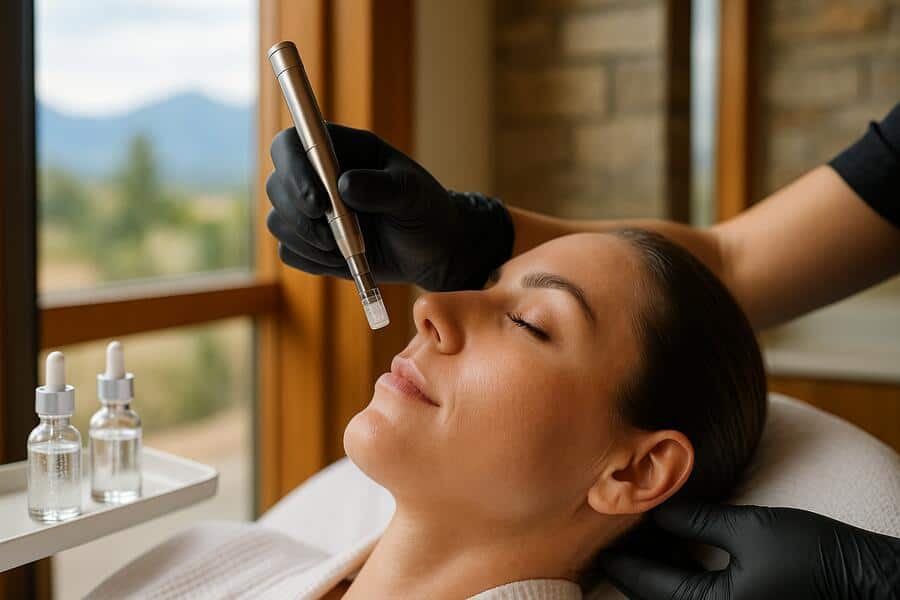
In the evolving world of aesthetic treatments, microneedling & microinfusion stand out as popular, effective methods for skin rejuvenation. While both involve creating micro-channels in the skin, their mechanisms, primary goals, and application methods differ significantly. Understanding these distinctions is key to choosing the right treatment for your skin concerns and achieving your desired results. We’ll explore the science, benefits, and applications of each procedure to help you make an informed decision.
Whether you’re looking to address fine lines, texture irregularities, or simply enhance your skin’s overall radiance, learning about these advanced techniques is the first step. For those exploring options like microneedling near me, understanding the nuances between microneedling and microinfusion can significantly guide your choice towards a professional who can deliver optimal care tailored to your specific skin health goals.
💡 Key Takeaway: Microneedling and microinfusion both utilize micro-channels but target different primary outcomes. Microneedling focuses on collagen induction, while microinfusion emphasizes serum delivery.
The Science Behind Microneedling and Microinfusion: A Detailed Look
What is Microneedling?
Microneedling, often referred to as collagen induction therapy (CIT), is a minimally invasive procedure designed to stimulate the skin’s natural healing processes. It involves using a device with fine, sterile needles to create controlled micro-injuries on the skin’s surface. These tiny punctures are invisible to the naked eye but serve a crucial purpose: they prompt the body to produce new collagen and elastin.
The process works by triggering a repair response, leading to a cascade of growth factors and cellular regeneration. As new collagen forms, the skin gradually becomes firmer, smoother, and more even in tone and texture. This makes microneedling highly effective for concerns such as:
- Reducing the appearance of acne scars
- Minimizing fine lines and wrinkles
- Improving skin texture and elasticity
- Addressing hyperpigmentation and sun damage
- Shrinking enlarged pores
The FDA has cleared microneedling devices for use in improving the appearance of facial acne scars and facial wrinkles, indicating its established safety and efficacy when performed by trained professionals.
What is Microinfusion?
Microinfusion is a specialized form of treatment that combines the creation of micro-channels with the simultaneous delivery of a precisely formulated serum. Unlike traditional microneedling, where serums are typically applied topically after the punctures have been made, microinfusion devices are designed to push active ingredients directly into the skin as the channels are created.
This “stimulation-plus-delivery” approach ensures that the skin absorbs a higher concentration of beneficial ingredients, such as hyaluronic acid, vitamins, growth factors, or even small amounts of neuromodulators, at the moment the channels are most receptive. The needles on a microinfusion device are often finer and shorter than those used in traditional microneedling, designed for superficial penetration and optimal serum absorption.
Common applications for microinfusion include:
- Achieving an immediate “glass skin” effect or temporary glow
- Delivering custom cocktails for targeted hydration and brightening
- Reducing pore size and fine lines for special events
- Improving skin tone and texture with specific active ingredients
- Scalp microinfusion for delivering growth factors to address hair loss
The primary goal of microinfusion is to infuse the skin with potent ingredients for a more immediate, visible enhancement, rather than relying solely on the body’s natural collagen production over time.
💡 Key Takeaway: Microneedling is collagen-focused for long-term improvement, while microinfusion is delivery-focused for immediate enhancement and targeted ingredient absorption.
Key Differences and Similarities Between Microneedling and Microinfusion
While both treatments involve needles penetrating the skin, their core objectives and procedural nuances set them apart. Understanding these differences is crucial for selecting the most appropriate treatment.
| Feature | Microneedling | Microinfusion |
|---|---|---|
| Primary Goal | Collagen Induction Therapy (CIT) for long-term skin restructuring. | Direct serum delivery for immediate enhancement, hydration, and glow. |
| Needle Depth | Varies (0.5mm to 2.5mm+) to reach deeper dermal layers. | Generally superficial (0.25mm to 0.6mm) for optimal product absorption. |
| Serum Delivery | Topical application of serums *after* needling. | Simultaneous infusion of pre-mixed serums *during* needling. |
| Results Focus | Gradual, cumulative improvement in scars, texture, elasticity over weeks/months. | More immediate visible effects, such as brightness, hydration, and temporary pore reduction. |
| Downtime | Typically 2-5 days of redness, swelling, and mild peeling. | Minimal downtime, often just mild redness for a few hours. |
Choosing the Right Treatment for You
Deciding between microneedling and microinfusion depends on your individual skin concerns, aesthetic goals, and desired downtime. A professional consultation is always recommended to assess your skin and discuss the best course of action. However, here’s a general guide:
Consider Microneedling If:
- You’re looking for significant, long-term improvement in acne scars, surgical scars, or stretch marks.
- You want to address deep wrinkles, fine lines, and overall skin laxity.
- Your primary goal is to stimulate your body’s natural collagen and elastin production for comprehensive skin rejuvenation.
- You are prepared for a few days of social downtime.
- You seek to improve uneven skin tone, hyperpigmentation, or sun damage over time.
Consider Microinfusion If:
- You desire an instant glow or “red carpet ready” appearance for a special event.
- You want to deliver specific nourishing serums, vitamins, or even very small amounts of muscle relaxants superficially to the skin.
- Your concerns are primarily superficial, such as mild dehydration, dullness, or very fine lines.
- You need a treatment with minimal to no downtime.
- You’re looking for targeted delivery of potent active ingredients.
💡 Key Takeaway: A professional evaluation of your skin concerns and aesthetic goals is essential to determine whether microneedling or microinfusion is the most suitable treatment.
Conclusion
Both microneedling and microinfusion offer powerful ways to enhance skin health and appearance, but they operate with different strengths. Microneedling is a robust treatment for deep, long-lasting collagen remodeling, addressing more significant concerns like scars and texture. Microinfusion, on the other hand, excels at delivering targeted nutrients for immediate radiance and superficial improvements. By understanding what each procedure entails and consulting with an experienced professional, you can confidently choose the path that aligns best with your unique skin journey.
Have questions about professional concrete cleaning in Phoenix? Give us a call today.
Frequently Asked Questions About Microneedling & Microinfusion
What is the typical recovery time for microneedling?
For professional microneedling, expect about 2-5 days of redness, similar to a sunburn, along with mild swelling and possible flaking. The exact downtime can vary depending on the needle depth used and individual skin sensitivity.
Can microinfusion replace my regular skincare routine?
No, microinfusion is an enhancement to your routine. It optimizes the delivery of active ingredients, but a consistent daily skincare regimen tailored to your skin type remains crucial for maintaining long-term skin health and protecting your results.
Are microneedling and microinfusion painful?
Topical numbing cream is typically applied before both procedures to minimize discomfort. Patients often describe microneedling as feeling like a coarse exfoliation or light vibration. Microinfusion, being more superficial, is generally less intense and often well-tolerated.
How many sessions are typically recommended for each treatment?
For microneedling, a series of 3-6 sessions, spaced 4-6 weeks apart, is commonly recommended for optimal results, especially for concerns like acne scars. Microinfusion can be done as a single treatment for an immediate boost or in a series of 2-4 sessions for cumulative effects, often spaced every 2-4 weeks.


